 +971 58 515 9269

Dubai Luxury Watch Market Report 2026: Data-Driven Industry Analysis for Buyers & Investors

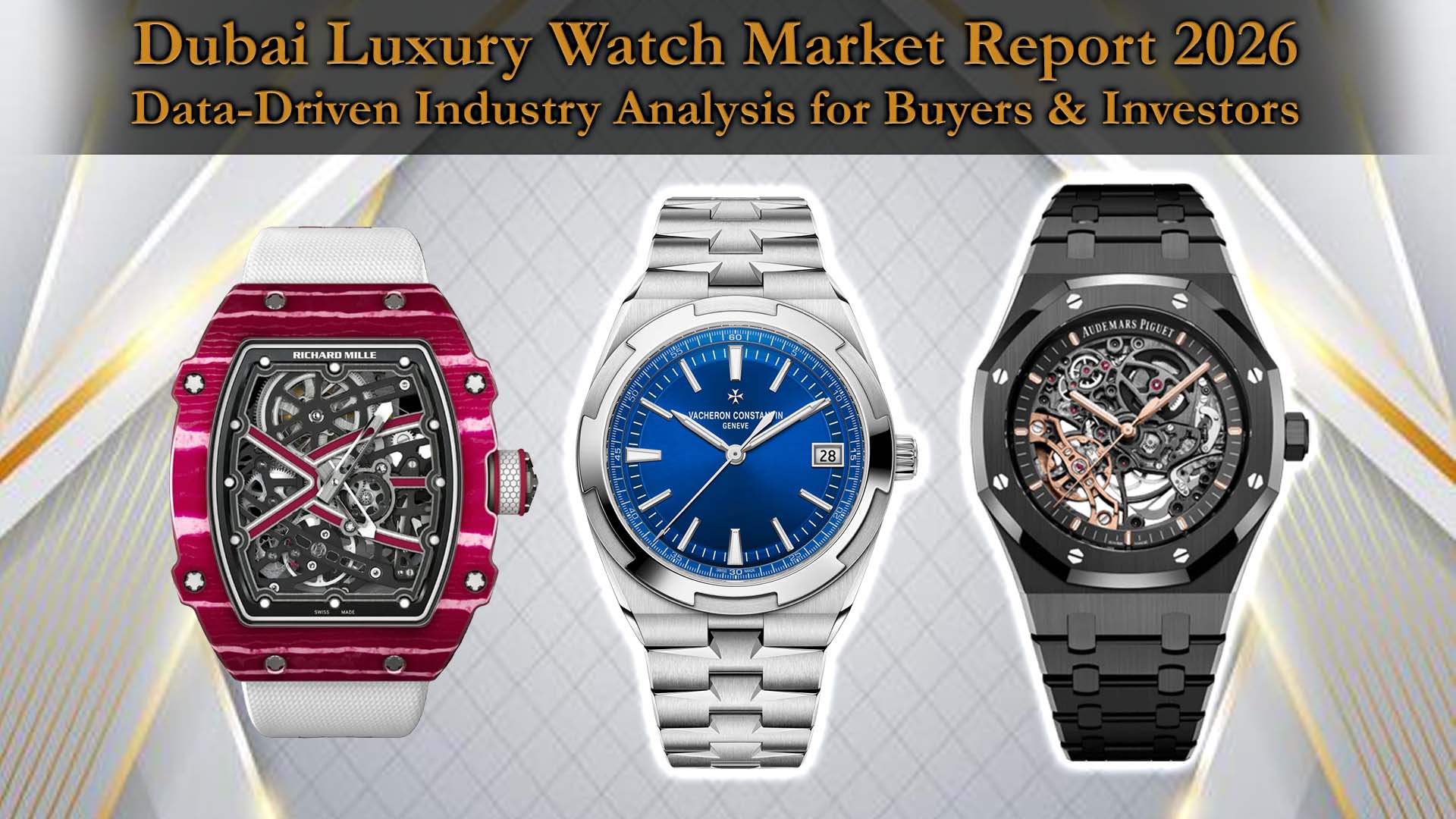
Luxury Watch Market Dubai 2026 — Capital Flows, Resale Liquidity & Global Supply Chain Shifts ⌚📊
The luxury watch market Dubai 2026 is no longer defined by retail display windows or seasonal tourism spikes. It has matured into a structured, capital-driven ecosystem influenced by global supply constraints, secondary-market liquidity, and cross-border wealth movement.
In 2026, Dubai is functioning less as a regional retail center and more as a redistribution hub for high-value timepieces. Investors, collectors, fashion buyers, corporate executives, and industrial entrepreneurs are all participating — but with different motivations.
Understanding how this market actually operates requires looking beyond brand prestige and into data patterns, resale velocity, and international capital behavior.
This report breaks down the macro forces shaping Dubai’s luxury watch economy and explains why platforms like Buy & Sell Watches Dubai are positioned within a larger global liquidity network rather than a simple local retail channel.
Market Size & Demand Behavior in 2026
Dubai’s watch demand in 2026 is supported by three measurable pillars:
- Resident High-Net-Worth Growth — Continued relocation of global entrepreneurs and executives to the UAE.
- Tourism with Purchasing Power — Visitors from Europe, Asia, GCC, and Africa actively buying high-value assets.
- Secondary Market Acceleration — Increasing preference for pre-owned, market-corrected pricing.
Unlike purely retail-driven markets, Dubai’s trading environment includes active buying, selling, upgrading, and portfolio rebalancing.
The broader luxury watches category in Dubai reflects this diversity — serving buyers entering at different capital levels, from mid-five figures to seven-figure collections.
Resale Liquidity: The Real Strength of Dubai
Liquidity determines whether a watch functions as a true asset.
In 2026, Dubai’s secondary market continues to outperform many European cities in transaction speed for high-demand references.
Strong liquidity segments include:
- Stainless steel sports Rolex
- Patek Philippe Nautilus & Aquanaut
- Audemars Piguet Royal Oak (steel)
- Select Richard Mille references
Buyers increasingly analyze resale benchmarks before purchasing — which explains the growth of the pre-owned luxury watches segment as a primary entry point rather than an alternative option.
Retail buying is emotional. Secondary buying is strategic.
Swiss Supply Chain Impact on Dubai Pricing
Dubai’s luxury watch pricing in 2026 cannot be analyzed without understanding Swiss production control.
Major Swiss manufacturers continue to:
- Limit production volumes
- Maintain strict distribution control
- Protect brand positioning through scarcity
When Swiss supply tightens, Dubai’s secondary prices often adjust upward due to immediate demand and limited availability.
This dynamic is particularly visible in segments such as:
Dubai reacts quickly to global supply shifts because of its international buyer base.
Global Capital Movement & Portable Wealth
One of the most significant 2026 trends is the use of luxury watches as portable capital.
Compared to:
- Real estate (illiquid)
- Equities (market volatility exposure)
- Digital assets (regulatory fluctuation)
High-end watches offer:
- Portability
- Global brand recognition
- Private resale channels
- Wealth mobility across borders
Dubai’s tax structure further strengthens this position, making it an attractive location for both holding and transacting.
Price Stability vs Volatility by Brand
The 2026 Dubai market reveals brand-specific behavior:
Rolex
Consistent liquidity. Moderate volatility. Broad buyer base.
Patek Philippe
Long-term stability. Lower transaction frequency but strong capital preservation.
Audemars Piguet
Design-driven demand with selective volatility in niche references.
Richard Mille
Higher volatility. Strong regional visibility. Buyer knowledge essential.
Understanding this hierarchy helps investors allocate intelligently rather than chasing hype.
Dubai Compared to Other Global Watch Hubs
When comparing Dubai to Geneva, London, or Singapore in 2026:
- Dubai demonstrates faster transaction cycles for sports models.
- Buyer diversity is broader.
- Regional demand from GCC and Asia supports pricing.
- Capital gains tax structure remains favorable.
Dubai is not merely competing with traditional hubs — it is influencing global secondary pricing flows.
Risk Considerations in the 2026 Market
No asset class is risk-free.
Watch market risks include:
- Trend-driven speculation
- Overexposure to volatile brands
- Documentation gaps
- Authentication risks
Buyers unfamiliar with verification standards should understand authentication principles such as those outlined in luxury watch authenticity checks in Dubai before entering higher-value transactions.
Risk mitigation separates collectors from speculators.
2026 Outlook: What Happens Next?
Current indicators suggest:
- Continued strength in steel sports models
- Stable demand for blue-chip brands
- Growing interest in independent haute horology
- Increasing use of watches as portfolio diversification tools
Dubai’s role will likely expand further as global wealth continues shifting toward tax-efficient and liquid asset environments.
Final Market Assessment
The Dubai luxury watch market in 2026 is structured, informed, and globally connected.
It is no longer driven by impulse buyers.
It is supported by capital discipline.
For fashion enthusiasts, watches represent status.
For investors, they represent liquidity.
For industrial leaders and entrepreneurs, they represent mobile wealth.
Dubai has successfully combined all three motivations within one functioning marketplace.
Understanding these structural forces allows buyers and sellers to move intelligently rather than emotionally.
And in a city where capital moves quickly, knowledge remains the strongest advantage.