 +971 58 515 9269

From Status to Strategy: How High-End Buyers Choose Between Rolex, Patek Philippe & Audemars Piguet

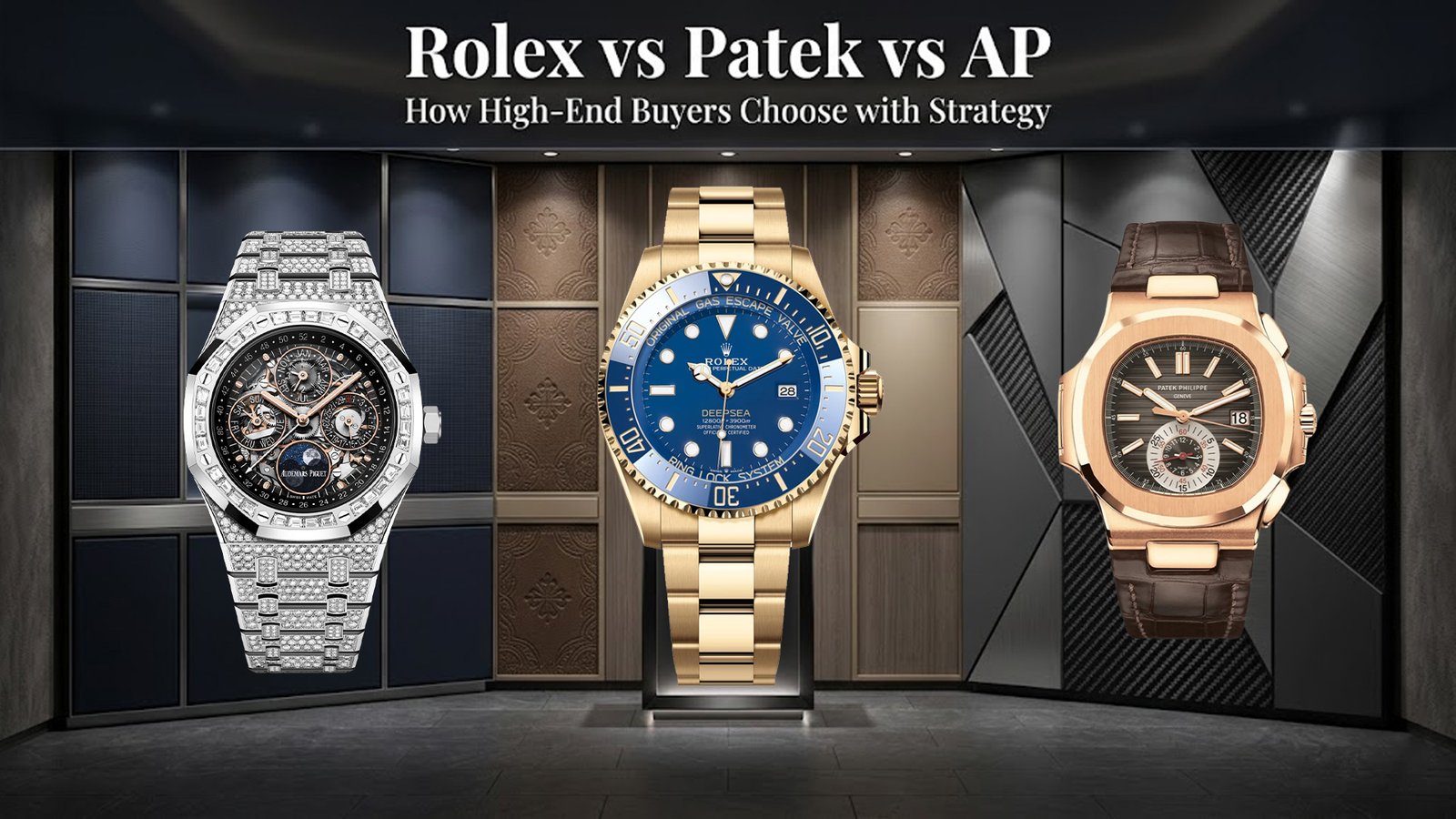
The most serious watch buyers do not ask which brand is most famous — they ask which one makes the most sense for who they are, how they live, and what they want their watch to say ⌚
At the top of the luxury watch market, three names continue to shape a remarkable amount of buyer attention: Rolex, Patek Philippe, and Audemars Piguet. They are all respected. They are all globally recognized. They all sit comfortably in the world of serious collecting and high-end ownership. But buyers who understand this market well know that choosing between them is rarely just about prestige. It is about identity, timing, purpose, and the kind of ownership experience they actually want.
That is why the strongest watch decisions today are less about status alone and more about strategy. A buyer may admire all three brands, but still be far better suited to one than the others. One brand may fit daily life better. Another may align more closely with personal taste. Another may offer the emotional weight or long-term confidence that matters most to that individual. The real difference often appears when the buyer stops asking, “Which one is bigger?” and starts asking, “Which one is right?”
Rolex: the language of confidence, familiarity, and market clarity
Rolex remains the easiest of the three brands to understand at a broad level, and that is part of its power. It has enormous global recognition, one of the strongest resale cultures in luxury goods, and a model lineup that balances wearability, prestige, and daily practicality better than almost any other major watch house.
Buyers often choose Rolex when they want certainty. Not boring certainty, but high-confidence certainty. They want a watch that can move easily between business, travel, personal milestones, and long-term ownership without creating complications they did not ask for. Rolex often attracts people who want their purchase to feel justified from every angle — emotionally, socially, and financially.
That is one reason the brand remains such a powerful reference point in the broader Rolex market. It is not only admired. It is widely understood. For many buyers, that kind of clarity is hard to beat.
Patek Philippe: the language of heritage, refinement, and deeper watch culture
Patek Philippe attracts a different buyer mindset. Where Rolex often speaks through broad confidence and universal familiarity, Patek often speaks through restraint, legacy, and design seriousness. It tends to attract buyers who are looking for more than recognition. They want a watch that feels intellectually and emotionally deeper.
This does not make Patek better in every situation. It makes it more specific. A Patek Philippe buyer often values elegance over immediate visibility, history over trend, and refinement over straightforward practicality. These are usually buyers who appreciate what the watch represents within the wider tradition of haute horology. They may still care about market value, but they are often equally motivated by taste, lineage, and the sense that the watch belongs to a more rarefied conversation.
That is why many buyers who move toward Patek are no longer shopping only for a status symbol. They are shopping for something that feels culturally and personally complete. That deeper appeal is also why the brand continues to hold such a strong place in discussions around Patek Philippe buying and collecting.
Audemars Piguet: the language of design identity and selective visibility
Audemars Piguet, especially through the Royal Oak family, often attracts buyers who want luxury to feel sharper, more design-led, and a little less predictable. AP sits in an interesting position between Rolex confidence and Patek refinement. It can feel more visually assertive than Patek, but more taste-driven than the most obvious Rolex choices. For many high-end buyers, that balance is exactly the appeal.
People who choose AP often care deeply about design identity. They like the fact that the watch is recognizable, but not in the same way as Rolex. They like that it feels luxurious, but also a little more selective. In many cases, they want a watch that signals not only success, but a certain kind of visual judgment.
This is why AP often resonates with buyers who have moved beyond first-stage luxury decisions. They are no longer looking for the safest answer. They are looking for the most personally compelling one.
Status is real, but it is not the whole decision
All three brands carry status. Pretending otherwise would be dishonest. But the deeper reality is that high-end buyers rarely choose between them on status alone. Status gets attention. Strategy closes the deal.
The buyer who chooses Rolex is often prioritizing flexibility, recognition, ease of ownership, and broad market comfort.
The buyer who chooses Patek Philippe is often prioritizing heritage, elegance, deeper watchmaking culture, and emotional permanence.
The buyer who chooses Audemars Piguet is often prioritizing design, distinctiveness, and a more selective kind of luxury confidence.
These are not rigid rules, but they help explain why the same three brands can attract very different people even when all three are financially capable of buying any of them.
Serious buyers think about wear, not only admiration
One of the clearest differences between casual interest and serious buying is this: serious buyers imagine the watch in real life. They think about where they will wear it, how often they will wear it, how it will feel after six months, and whether it will still feel right once the novelty fades.
This is where strategy becomes very visible. A buyer may admire Patek Philippe deeply but still choose Rolex because their lifestyle is faster, more active, and more travel-oriented. Another may admire Rolex but ultimately choose AP because they want something with stronger design personality. Another may admire AP but move toward Patek because they have already reached a point where discretion matters more than visual energy.
The best high-end watch decisions often happen when admiration gives way to self-awareness.
Exit value still influences the best decisions
Even when buyers do not openly describe themselves as investors, many still think quietly about future flexibility. They want to know whether the watch will remain respected, whether it will be easy to trade or sell later, and whether it will still feel like a defensible purchase after the emotional moment has passed.
That does not mean every buyer is buying for profit. It simply means serious buyers rarely ignore market reality. The most thoughtful ones understand that strong ownership begins with a strong entry point. They care about brand strength, reference quality, documentation, and how the watch is likely to behave in the resale market if life or taste changes later.
This is why so many buyers now think about the wider luxury market in terms of both emotional value and exit value. They do not see those ideas as opposites. They see them as part of the same intelligent purchase.
Mature buyers usually choose the brand that fits their current life stage
This is one of the most overlooked parts of the conversation. Different brands often fit different phases of life.
A buyer building momentum, traveling constantly, and wanting one highly reliable symbol of success may feel completely at home with Rolex.
A buyer who has already owned obvious luxury and now wants something more refined, historical, or personally meaningful may gravitate toward Patek Philippe.
A buyer who values visible design, stronger individuality, and a watch that feels less expected may find the clearest connection with Audemars Piguet.
The smartest decision is not always the most prestigious one in theory. It is the one that feels most truthful in practice.
Final Thoughts
High-end buyers choose between Rolex, Patek Philippe, and Audemars Piguet by thinking beyond status and moving into strategy. They look at how they live, what kind of luxury they want to wear, how much design or heritage matters to them, and what sort of confidence they want the watch to carry.
Rolex offers clarity, strength, and broad confidence. Patek Philippe offers refinement, cultural weight, and quieter depth. Audemars Piguet offers design identity, selective prestige, and a more visually distinctive form of luxury. None is universally superior. The strongest choice is the one that aligns most honestly with the buyer’s taste, timing, and long-term thinking.
In the end, serious watch buying is never only about what the world respects. It is about choosing the brand you will still respect once the excitement settles and real ownership begins.