 +971 58 515 9269

Why Smart Luxury Watch Buyers Think About Exit Value Before They Buy

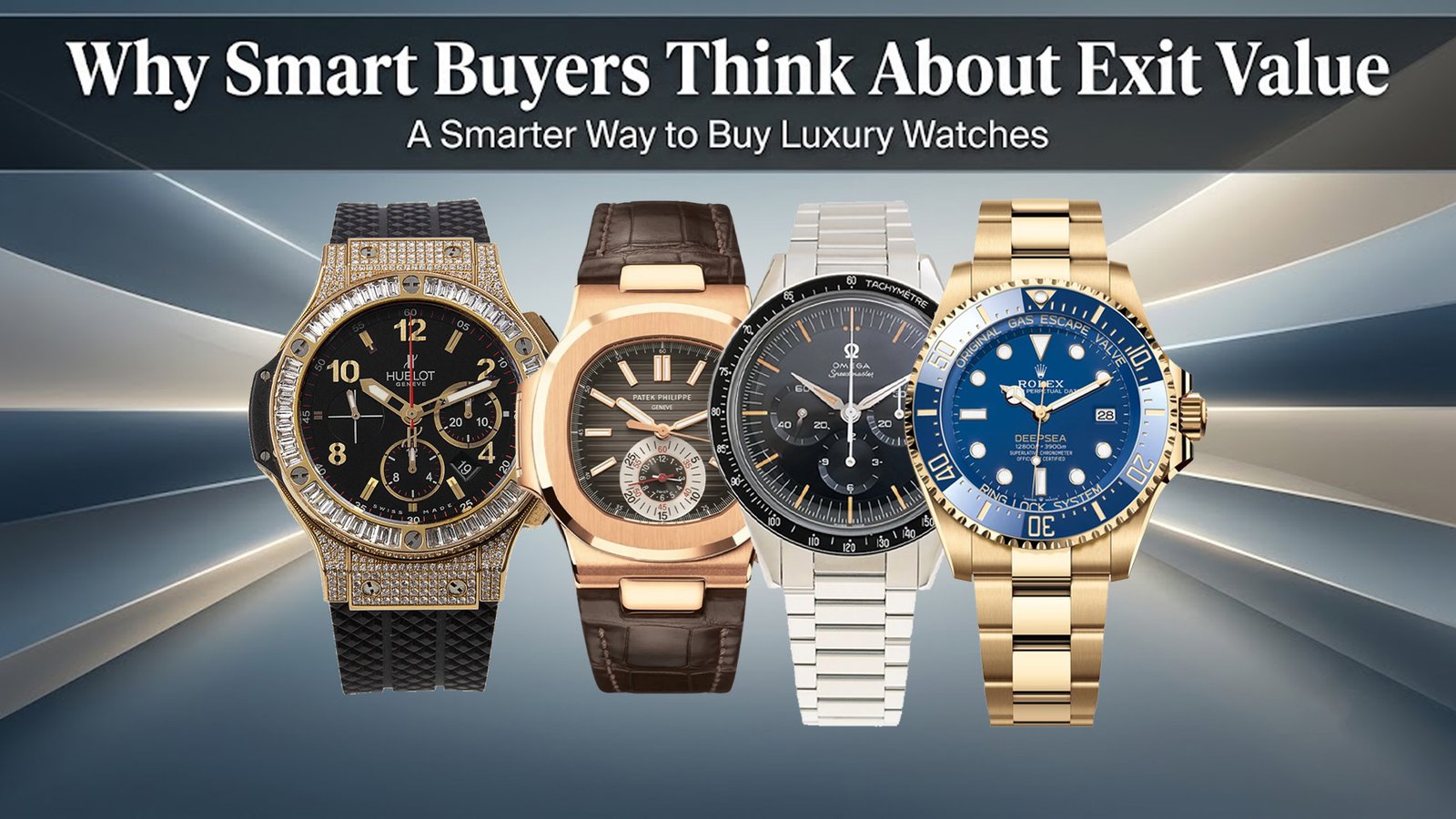
The strongest watch purchases are rarely driven by excitement alone — they are shaped by taste, timing, and the quiet discipline of thinking one step ahead ⌚
Luxury watch buying is often described as emotional, and that is not wrong. A great watch can mark a personal milestone, reflect success, sharpen a wardrobe, or simply satisfy a long-held desire. But the buyers who consistently make the strongest decisions usually bring something else into the process as well: they think about exit value before the purchase ever happens.
That idea may sound overly financial at first, especially in a category built around craftsmanship, legacy, and personal enjoyment. But serious buyers understand that considering future value does not make the purchase less meaningful. It makes it more intelligent. In fact, the ability to think beyond the first moment of excitement is often what separates a good luxury purchase from a careless one.
In 2026, this mindset matters more than ever. The luxury watch market is more transparent, more discussed, and more closely watched than it used to be. Buyers can compare references faster, follow price behavior more easily, and understand condition or documentation with far greater clarity than previous generations of collectors. As a result, the strongest buyers are no longer asking only, “Do I want this watch?” They are also asking, “If I own this well, how will the market likely view it later?”
Exit value is not about buying without passion
There is a common misunderstanding that buyers who think about resale are somehow less authentic than buyers who purchase entirely from emotion. In reality, many of the most thoughtful collectors and long-term owners do exactly that. They buy with passion, but they buy with structure too.
Thinking about exit value does not mean treating every watch like a short-term trade. It simply means understanding that luxury objects live in a market, and market behavior matters. A watch may be deeply enjoyable to wear and still be a poor decision if it is overpriced, weak in condition, difficult to move later, or missing the kind of documentation serious buyers expect. Good ownership becomes easier when the purchase is intelligent from the beginning.
The best buyers understand that value is not just about price
When people talk about future value, they often reduce the conversation to one narrow point: whether the watch will go up or down in price. But exit value is broader than that. It includes how easily the watch can be sold, how much buyer confidence it inspires, how quickly it attracts serious attention, and whether the next buyer sees it as clean, complete, and desirable.
That means a watch with stable demand, excellent condition, and full-set support can sometimes be a much stronger purchase than a more famous watch bought poorly. This is one reason experienced buyers care so much about quality of example, not just model name. They know that the cleaner watch is often the easier watch to own well and the easier watch to move later.
Brand strength matters, but it is never the whole story
Some brands naturally create more confidence in the resale market than others. That is simply part of how the luxury watch world works. Brands like Rolex, Patek Philippe, Audemars Piguet, and Richard Mille usually benefit from stronger global recognition, deeper buyer pools, and more developed secondary-market visibility.
But even within powerful brands, not all references behave the same. Some models remain consistently liquid. Others are more taste-driven. Some retain broad demand because they sit at the center of brand identity. Others appeal to a narrower collector base and require more patience later. This is why serious buyers study the watch itself, not just the name on the dial.
Buyers who already understand the broader luxury watch investment market tend to appreciate this distinction naturally. They know that brand matters, but reference quality, condition, and completeness matter just as much.
Condition has a direct effect on exit value
Few things influence future sale confidence more than condition. A watch can be prestigious, rare, and desirable, but if it has been over-polished, poorly serviced, or worn carelessly, the next buyer will feel that immediately. In luxury watches, small flaws can have an outsized effect because the buyer is often paying not just for the object, but for how convincingly the object has been preserved.
This is why experienced buyers think carefully about case integrity, bracelet wear, dial originality, and overall sharpness before they buy. They understand that condition is not only about aesthetics. It directly shapes future marketability. A better-preserved watch is usually easier to defend, easier to price, and easier to respect.
It also explains why many informed buyers spend time understanding how condition grading works in the pre-owned market before making a serious purchase. They know that great buying begins with honest evaluation.
Paperwork and full-set status still matter for future confidence
Box and papers do not replace a strong watch, but they strengthen the watch story in a way that matters later. A full-set watch usually inspires greater confidence because it feels more complete, more traceable, and easier to explain in the next transaction. It may not always transform the watch itself, but it often transforms the quality of the resale conversation.
That is one reason smart buyers do not treat completeness as a decorative extra. They understand that if two watches are equally strong, the one with cleaner documentation often feels safer. That difference can matter not only in final price, but in buyer response speed and total market comfort.
Exit value protects flexibility
One of the most overlooked benefits of thinking ahead is flexibility. Not every buyer knows exactly how long they will own a watch. Tastes change. Collections evolve. Life priorities shift. A buyer may fall in love with a watch today and still want something different two years later. That does not make the original purchase a mistake. But it does mean the watch should be chosen with enough future liquidity to keep options open.
This is where exit value becomes practical rather than theoretical. A watch with strong resale confidence gives the owner freedom. Freedom to upgrade. Freedom to trade. Freedom to reduce the collection without feeling trapped in a poor decision. Even for buyers who never expect to sell, that kind of optionality adds quiet peace of mind.
The smartest luxury buyers think in total outcomes
A great purchase is not only about what happens on the day you buy the watch. It is about the full arc of ownership. How does the watch wear over time? How does it fit your life? How does it hold up physically? How does it behave in the market? Will it still feel defensible if you decide to move it later?
Buyers who think in total outcomes often make calmer decisions. They are less likely to overpay for noise, less likely to ignore condition, and less likely to chase a model only because it is popular for the moment. They usually buy watches that feel more complete from the start, because they are not only buying excitement. They are buying a full ownership experience.
This mindset does not weaken luxury — it strengthens it
Some people still imagine that real luxury should ignore resale logic entirely. But that idea feels outdated. In a more informed market, thinking carefully is not a sign of weakness. It is a sign of seriousness. The buyer who understands exit value is not making the watch less special. They are making the decision stronger.
Luxury becomes more meaningful when it is chosen well. The emotional side of the purchase does not disappear just because the buyer has structure. In fact, the opposite is often true. A buyer who knows they chose wisely usually enjoys the watch with more ease, not less.
Final Thoughts
Smart luxury watch buyers think about exit value before they buy because they understand that high-end purchases deserve more than impulse. They deserve perspective. A great watch should still feel exciting, personal, and rewarding — but it should also make sense when the excitement settles.
The strongest buyers are not cold. They are simply prepared. They care about condition, completeness, brand strength, market respect, and future flexibility because all of those things shape the quality of ownership. In a market where trust and clarity matter more every year, that kind of thinking is not overly cautious. It is simply mature.
The best luxury watch decisions often begin with one quiet question: if I choose this well today, will I still feel confident about it tomorrow?