 +971 58 515 9269

How to Evaluate the Investment Potential of Luxury Watches in Dubai (2026 Strategic & Global Guide)

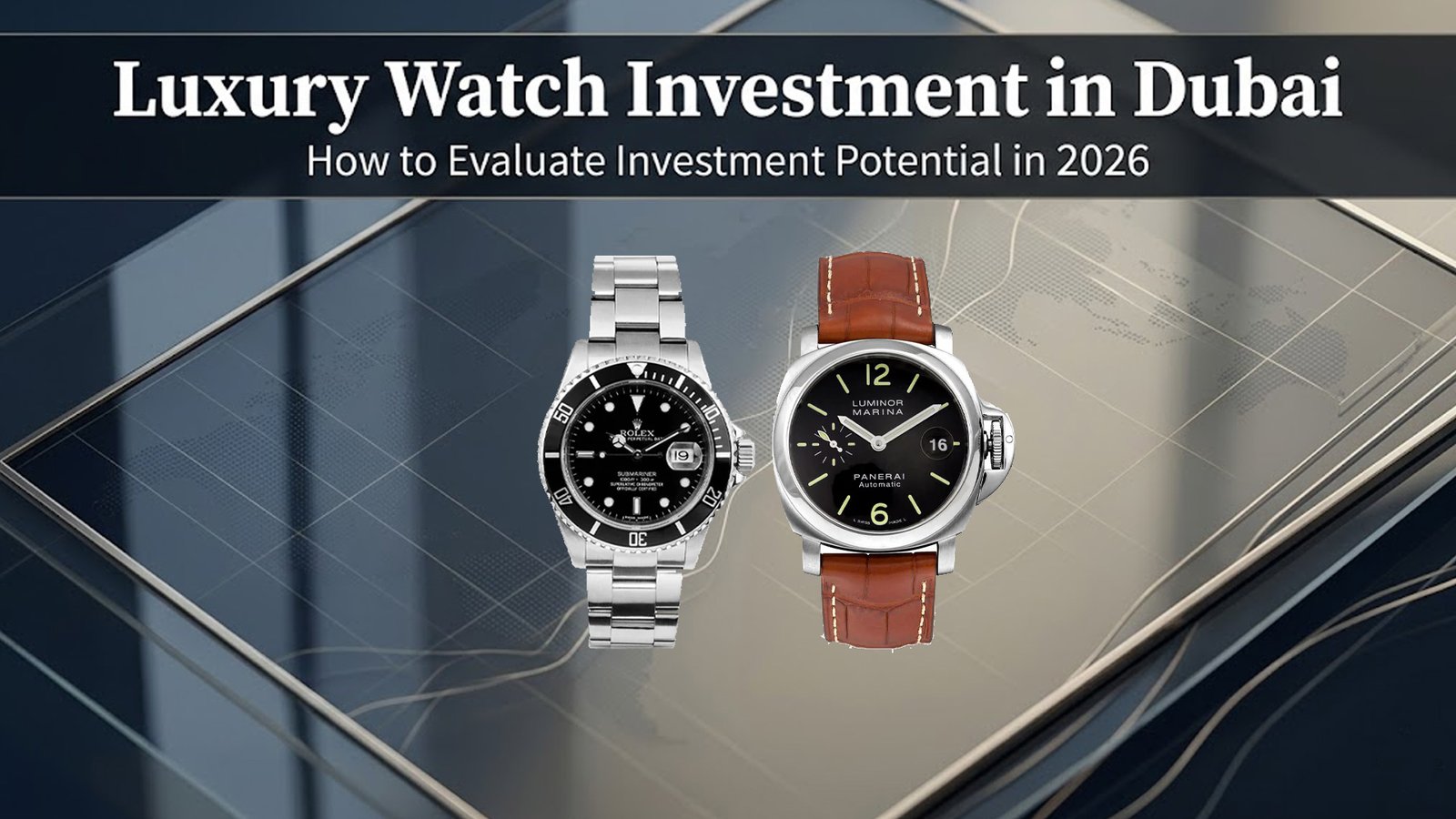
A Clear, No-Hype Investment Framework for Buyers, Collectors & Investors Who Think Long Term ⌚📊
Luxury watches have quietly evolved into one of the most resilient alternative asset classes in the world. In 2026, they sit alongside art, classic cars, and real estate as tangible stores of value—but with one major advantage: liquidity. Nowhere is this shift more visible than in Dubai, a city where luxury watches are not just collected, but actively traded on a global scale.
However, treating watches as investments requires far more than buying an expensive brand and hoping for appreciation. In Dubai’s mature secondary market, value is earned through discipline, market awareness, and informed decision-making. Some watches compound steadily over time, while others stagnate—or worse—lose relevance.
This expanded guide explains, in practical and human terms, how to evaluate the real investment potential of luxury watches in Dubai, while remaining relevant for international buyers from the USA, Europe, Asia, and beyond who actively participate in this market.
Why Dubai Is a Global Powerhouse for Luxury Watch Investment
Dubai’s appeal as a watch investment hub is structural, not seasonal. It combines global demand with an ecosystem built for efficient trading.
Key advantages include:
- A highly liquid and transparent secondary market
- Strong participation from international buyers and sellers
- Market-driven pricing rather than retail-controlled pricing
- No capital gains tax on personal asset sales
For investors in the USA and Europe, Dubai offers something rare: the ability to buy and sell luxury watches in a market that responds quickly and honestly to demand. Watches here are not locked away as static collectibles—they circulate constantly, which is essential for price discovery and exit flexibility.
Investment vs Collecting: Know Which Mindset You’re Using
Before evaluating any watch, investors must be honest about intent.
Collectors buy with emotion, design preference, or brand loyalty. Investors buy with:
- Exit strategy in mind
- Market demand awareness
- Risk-adjusted expectations
In Dubai, the most successful participants understand when a watch is a passion purchase and when it is a financial asset. Confusing the two often leads to disappointment.
Step 1: Separate Price From Long-Term Value
Price is transactional. Value is behavioural.
A watch’s price may rise quickly due to hype, celebrity exposure, or limited releases—but long-term value depends on sustained demand. In Dubai, watches that hold value over time share common characteristics:
- Consistent global buyer interest
- High liquidity in the secondary market
- Recognition across multiple regions (USA, Europe, Asia, GCC)
Investors who focus only on short-term appreciation often enter at inflated levels. Those who prioritise value focus on demand durability, not momentum.
Step 2: Choose Brands With Proven Secondary-Market Depth
Brand prestige alone does not guarantee investment performance. What matters is resale behaviour.
In Dubai, brands with deep, reliable markets include Rolex, Patek Philippe, and Audemars Piguet. These brands benefit from:
- Global buyer recognition
- Frequent secondary-market transactions
- Clear pricing benchmarks across regions
Prestigious but less liquid brands can still be enjoyable—but from an investment standpoint, they often carry higher exit risk.
Step 3: Analyse the Reference, Not the Logo
Within every major brand, only a fraction of references consistently perform as investments.
Dubai’s market favours:
- Stainless steel sports watches
- Historically significant or discontinued references
- Models with long-standing collector followings
For example, not every Rolex appreciates. Not every Patek Philippe holds value equally. Serious investors study specific references, production ranges, and buyer behaviour before allocating capital.
This reference-level thinking is one reason Dubai’s investment community tends to outperform trend-driven markets.
Step 4: Condition Is a Financial Multiplier
Condition is not cosmetic—it is financial.
In Dubai’s secondary market, value is directly influenced by:
- Original case geometry and edges
- Dial originality and ageing
- Minimal or well-documented polishing
- Mechanical performance and servicing history
Two identical references can differ in resale value by tens of thousands based purely on condition. Investors who protect condition protect capital.
Step 5: Documentation Enhances Liquidity, Not Just Price
While a watch can still sell without box and papers, documentation dramatically improves liquidity—especially in Dubai’s international market.
Full documentation:
- Reduces buyer hesitation
- Expands the global buyer pool
- Speeds up resale timelines
For international buyers—particularly from the USA—documentation simplifies cross-border transactions and future resale, making it a strategic asset rather than a formality.
Step 6: Liquidity Beats Rarity Every Time
Rarity attracts attention. Liquidity creates exits.
In Dubai, the strongest investment watches are not always the rarest—but the ones that:
- Trade frequently
- Have predictable pricing ranges
- Attract consistent buyer demand
Ultra-rare watches may command headlines, but they often require long holding periods to sell. Investors seeking flexibility prioritise watches that can move efficiently.
Step 7: Enter Through the Pre-Owned Market
Most experienced investors begin with pre-owned luxury watches in Dubai, not retail purchases.
Pre-owned entry points offer:
- Market-correct pricing
- Immediate exposure to resale demand
- Lower depreciation risk
Dubai’s mature pre-owned ecosystem allows investors to observe market behaviour in real time—an advantage rarely available in retail-only markets.
Step 8: Build a Portfolio, Not a Single Bet
Successful investors think in portfolios, not individual watches.
In Dubai, balanced portfolios often include:
- Core holdings: High-liquidity, stable-demand watches
- Selective growth pieces: Measured upside with controlled risk
This approach reduces volatility while preserving upside—especially important in global markets where sentiment can shift quickly.
Step 9: Plan the Exit Before You Buy
Every investment should answer one question: Who will buy this from me later?
Before purchasing, investors should consider:
- Resale demand in Dubai
- International buyer interest
- Documentation and condition impact on exit
Dubai excels at exits due to professional resale infrastructure. Structured pathways such as selling luxury watches in Dubai allow investors to convert assets back into liquidity efficiently.
Common Investment Mistakes That Cost Real Money
Even in Dubai’s forgiving market, mistakes carry consequences.
Avoid:
- Buying purely based on hype or influencers
- Ignoring condition and originality
- Overpaying due to urgency or fear of missing out
- Assuming all luxury watches appreciate
Education, patience, and restraint consistently outperform speculation.
Final Perspective: Investing With Clarity in Dubai’s Luxury Watch Market
Dubai offers one of the most practical, globally connected environments for luxury watch investment in the world. But success here is earned—not assumed.
Investors who focus on liquidity, condition, documentation, and long-term demand position themselves for stability and flexibility, not surprises.
For those seeking market insight grounded in real transactions rather than theory, platforms such as Buy & Sell Watches reflect how the Dubai market truly operates—measured, transparent, and globally relevant.
Actionable Next Steps
- Explore market-aligned pre-owned opportunities before buying retail
- Evaluate resale demand as carefully as aesthetics
- Consult professionals before committing significant capital
If your goal is to invest, rebalance, or exit a luxury watch position with confidence, start by understanding the market—not chasing it.