 +971 58 515 9269

Why the Highest Watch Offer Is Not Always the Best Sale in Dubai

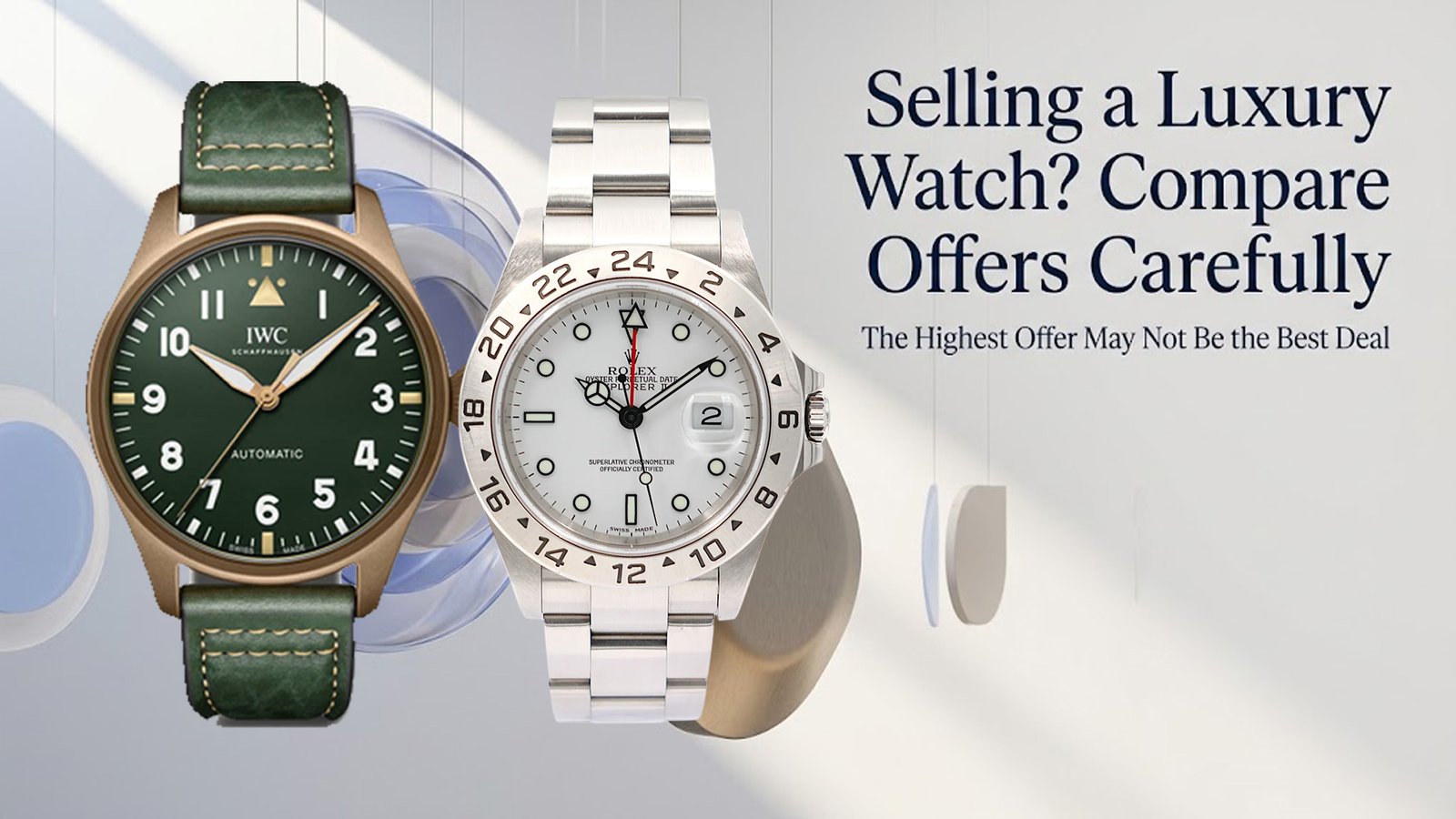
When several buyers or dealers quote for the same luxury watch, the natural reaction is to focus on the largest number. Sometimes that is exactly the right choice. Sometimes it is not. A headline offer can be conditional on physical inspection, reduced after missing links or service needs are discovered, tied to a trade-in, delayed by payment terms or based on assumptions that were never agreed clearly. For a seller, the strongest deal is the one that produces the best complete outcome after the watch, documentation, inspection conditions and settlement process are fully understood.
The highest quoted offer is not automatically the best luxury-watch sale because offers can differ in conditions, inspection deductions, payment timing, trade-in requirements and certainty of settlement. Sellers should compare the final expected amount, the conditions attached to it and the security of the transaction rather than choosing from the headline number alone.
First Ask What the Offer Actually Means
Not every number described as an “offer” represents the same commitment.
One buyer may be providing an indicative estimate based on photographs.
Another may be making a final offer after physical inspection.
A third may be quoting a trade-in allowance that only applies if you buy another watch from the same inventory.
Those numbers cannot be compared fairly until the conditions are understood.
| Offer Detail | What the Seller Should Ask | Why It Matters |
| Headline amount | Is this indicative or final? | A remote estimate may change after physical inspection |
| Condition assumptions | What condition has been assumed? | Undisclosed damage or service needs can change valuation |
| Completeness | Does the offer assume box, papers, links and accessories are present? | Missing items may change the final figure |
| Payment timing | When is settlement made? | A high offer is less useful if payment terms are unclear |
| Payment method | How will funds be transferred? | The seller should understand the settlement process before releasing the watch |
| Trade-in conditions | Is the number cash value or trade credit? | Trade credit and direct cash offers are different transactions |
| Post-inspection deductions | What could cause the offer to change? | Clear conditions reduce surprises during final negotiation |
An Indicative Valuation Is Not the Same as a Final Offer
A dealer looking at photographs can usually identify the brand, model, approximate reference and visible condition, but some important information may remain uncertain until the watch is physically inspected.
Examples include:
- case refinishing;
- bracelet stretch;
- movement condition;
- service requirements;
- aftermarket components;
- hidden impact damage;
- missing links;
- incorrect accessories;
- authentication concerns.
A remote quote should therefore be understood for what it is.
If you want a more structured starting point, a luxury watch appraisal in Dubai can help establish which information affects the valuation before the final transaction.
Seller insight: A slightly lower offer made after proper physical inspection can provide more certainty than a higher preliminary number that still contains several unresolved conditions.
Prepare the Watch Properly Before Requesting Offers
The easiest way to improve offer quality is to give buyers accurate information from the beginning.
Prepare:
- brand;
- model;
- full reference number;
- approximate year where known;
- clear photographs;
- description of condition;
- box;
- papers or warranty card;
- service history;
- spare bracelet links;
- additional straps;
- receipts;
- known replacement components;
- known aftermarket modifications.
Do not hide scratches or modifications in the hope of preserving a higher remote quote. If they are discovered during inspection, the negotiation is likely to become more difficult.
The broader guide to selling luxury watches in Dubai covers the overall seller process. Here, the objective is to make competing offers genuinely comparable.
Condition Assumptions Can Change the Final Amount
Suppose two dealers quote on the same Rolex based on photographs.
Dealer A assumes the case is lightly worn and unmodified.
Dealer B makes a slightly lower estimate but says the final figure will depend on whether the watch has been heavily polished.
Physical inspection later shows that the case has undergone significant refinishing.
Dealer A reduces the quote substantially. Dealer B makes only a minor adjustment because that possibility was already built into the valuation.
The larger first number was never truly the stronger offer.
Understanding how watch condition affects valuation helps sellers communicate their watches more accurately before negotiations begin.
Service Requirements Can Affect a Dealer’s Risk
A watch that appears attractive externally may require movement work.
This becomes especially important with:
- chronographs;
- annual calendars;
- perpetual calendars;
- tourbillons;
- complex independent watches;
- older watches with uncertain maintenance history.
A buyer acquiring the watch for resale may need to account for possible servicing before offering it to the next owner.
If you have credible service records, provide them.
A dated invoice showing what work was performed can be more useful than telling the buyer that the watch was “serviced a while ago”.
Review the site’s watch service-history guide to understand what strong documentation looks like.
Full Set Can Improve Confidence, but List Exactly What Is Present
Sellers often use the phrase “full set” loosely.
That can create problems when the buyer expects:
- inner and outer box;
- warranty card or certificate;
- manuals;
- tags;
- spare links;
- additional straps;
- service documentation;
- other reference-specific accessories.
Instead of writing “full set” and leaving the meaning open, list the items.
This is especially useful on watches where additional straps, clasps or tools formed part of the original package.
Cash Offer and Trade-In Allowance Are Not the Same Number
A trade-in allowance can be higher than a direct cash offer because it forms part of a larger transaction.
That does not automatically mean the seller is receiving more value.
You need to evaluate both sides:
- value assigned to your current watch;
- asking price of the watch you are acquiring;
- cash difference payable;
- any additional conditions.
If the goal is simply to sell and receive funds, compare direct-sale offers with direct-sale offers.
If the goal is to upgrade into another watch, assess the entire trade structure.
The site’s trade-in vs direct sale guide explains this distinction in more detail.
Transaction insight: A high trade-in allowance can look impressive while the watch being acquired is priced less attractively. Compare the net amount required to complete the whole transaction, not one side of the deal.
Payment Certainty Matters
A completed sale is not simply an agreed number.
The seller should know:
- how payment will be made;
- when payment is considered complete;
- when the watch changes possession;
- what identification or receipt will be provided;
- what happens if the parties do not agree after inspection.
For a high-value watch, vague settlement terms should be resolved before the watch is handed over permanently.
The objective is not unnecessary bureaucracy. It is ensuring that both parties understand the transaction.
Ask What Happens If the Final Offer Changes
A seller should know the inspection process before visiting a dealer or sending a watch for evaluation.
Useful questions include:
- Is the preliminary figure subject to inspection?
- Which discoveries may change it?
- Will the seller be told why the offer changed?
- Can the seller decline the revised offer?
- How is the watch returned if no agreement is reached?
Clarity at the beginning reduces pressure later.
The Highest Offer Can Be Weaker if the Buyer Does Not Understand the Watch
Some watches require specialist knowledge.
A rare Patek Philippe complication, unusual Richard Mille reference or independent watch may be valued differently by a buyer who understands the reference compared with someone who simply recognises the brand.
A high preliminary offer from an inexperienced buyer can become unstable when they later discover:
- service costs;
- reference-specific market demand;
- condition differences;
- replacement components;
- limited buyer liquidity.
A serious offer should be based on the actual watch rather than enthusiasm for the name on the dial.
Market Demand Affects What Dealers Can Pay
Two watches with similar original retail positioning can behave very differently in the secondary market.
Offers depend on factors including:
- exact reference;
- configuration;
- case material;
- condition;
- originality;
- service needs;
- box and papers;
- bracelet completeness;
- current buyer demand.
This is why a seller should avoid assuming that a famous brand automatically produces a particular percentage of retail value.
The market evaluates specific watches, not just logos.
Provenance Can Make an Offer Easier to Defend
Strong provenance does not guarantee a higher price, but it can reduce uncertainty.
Useful supporting material might include:
- original purchase documentation;
- service invoices;
- previous dealer invoices;
- auction records where applicable;
- documented ownership history.
For collectible or unusual pieces, the site’s luxury watch provenance guide explains why a coherent history can strengthen buyer confidence.
Consider Net Outcome, Not Ego
Sellers sometimes become emotionally attached to receiving the largest quoted number because it feels like validation of the watch.
That can distract from the practical transaction.
A good sale should answer:
- What amount will actually be settled?
- How certain is that amount?
- How quickly will settlement occur?
- Are there hidden conditions?
- Is another purchase tied to the offer?
- Do I understand why the watch has been valued this way?
A seller who answers those questions clearly is in a better position than someone comparing screenshots of headline numbers.
Seller insight: The best offer is the one you can understand from beginning to end. A number becomes meaningful only when the condition assumptions, settlement method and transaction terms are clear.
Frequently Asked Questions
Why can a watch offer change after inspection?
Physical inspection may reveal polishing, damage, missing components, service needs or aftermarket modifications that were not visible in photographs.
Should I always take the highest cash offer?
Not automatically. Compare whether the offer is final, the payment terms, inspection conditions and the credibility of the buyer before deciding.
Is a trade-in offer the same as a cash offer?
No. A trade-in allowance is tied to another purchase and should be evaluated as part of the total transaction.
What information should I provide before requesting a valuation?
Provide the brand, model, reference, approximate year, condition, clear photographs, box and papers, service history, links, straps, accessories and known modifications.
Does a full set guarantee a higher offer?
No. Completeness can improve buyer confidence, but exact reference, condition, originality, service needs and current demand remain important.
Should I disclose aftermarket parts?
Yes. Accurate disclosure creates a more reliable valuation and reduces the likelihood of major deductions after inspection.
Where can I discuss selling a luxury watch in Dubai?
You can review the selling watches in Dubai guide or discuss an individual watch with Buy & Sell Watches using its full reference, condition and set details.
Discuss Your Watch Sale
If you are preparing to sell a Rolex, Patek Philippe, Audemars Piguet, Richard Mille, Cartier, Hublot or another high-end watch, gather the full reference, condition details, box and papers, service history, spare links and clear photographs before requesting an offer. Buy & Sell Watches can then evaluate the individual watch with fewer assumptions and explain the transaction structure before you decide whether to proceed.